


Surviving Cancer Three Times: From Paper Routes to CRO Leadership
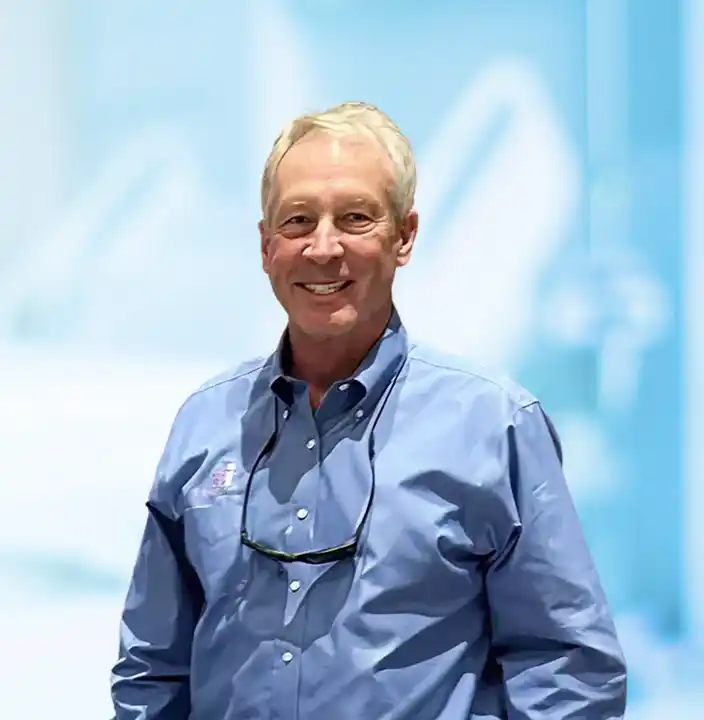
Michael Hanahan's cancer survival strategies combined vegetable juicing protocols, preventive screenings, and a glass-half-full mentality learned from a father who endured seven heart attacks. His story offers actionable wisdom for anyone facing health crises or supporting loved ones through cancer battles. In this episode of Fountain of Vitality with host LaMont Leavitt, Hanahan represents the intersection of entrepreneurial resilience and cancer survival that defies medical expectations. As CRO of innoviHealth, Hanahan's journey began with paper route entrepreneurship earning 25 cents daily assisting neighborhood delivery boys, evolved through advertising careers building campaigns for Coca-Cola and American Cancer Society, and included three separate cancer diagnoses before age 50.
About This Blog
Michael Hanahan's cancer survival strategies combined vegetable juicing protocols, preventive screenings, and a glass-half-full mentality learned from a father who endured seven heart attacks. His story offers actionable wisdom for anyone facing health crises or supporting loved ones through cancer battles. In this episode of Fountain of Vitality with host LaMont Leavitt, Hanahan represents the intersection of entrepreneurial resilience and cancer survival that defies medical expectations. As CRO of innoviHealth, Hanahan's journey began with paper route entrepreneurship earning 25 cents daily assisting neighborhood delivery boys, evolved through advertising careers building campaigns for Coca-Cola and American Cancer Society, and included three separate cancer diagnoses before age 50.
Hanahan's story challenges assumptions about cancer inevitability and treatment limitations. When Friday afternoon X-rays revealed lung cancer in a non-smoking athlete in peak physical condition, three doctors confirmed the diagnosis. An Emory Hospital specialist suggested waiting 11 weeks to see if spots changed. Hanahan implemented daily juicing protocols and increased church attendance. Eleven weeks later, the spots were completely gone, confounding every physician who had predicted his death.
Pittsburgh Roots and Glass-Half-Full Mentality
Michael Hanahan's entrepreneurial foundation began in Pittsburgh, Pennsylvania, where he remains a devoted Steelers fan despite current team struggles. His taste for entrepreneurship emerged early when he assisted a neighborhood paper delivery boy for 25 cents daily. When that young man outgrew the route, Hanahan took over and expanded from one paper route to two, recognizing he possessed a client list by virtue of delivering papers 70 times weekly. This client base enabled natural expansion into grass cutting during summer months and snow shoveling during winter, generating $15 to $18 weekly, substantially more than peers earned. This additional income funded hobbies and taught him the value of hard work years before most children understand business principles.
But Hanahan's most formative education came from his father, a steel mill worker in lower middle management who endured seven heart attacks throughout Hanahan's childhood. He spent countless hours in intensive care units by his father's side, watching a man with limited means and serious health challenges maintain relentless optimism. His father never complained despite repeated cardiac crises, volunteered in the community, and embodied the glass-half-full mentality that Hanahan would carry through his own health battles decades later. His father had wanted to become a priest in high school, spent four years serving in World War II, then worked at the steel mill while raising his family. Most of Hanahan's memories involve visiting his father during hospitalizations and witnessing someone look on the positive side despite circumstances that would justify bitterness or despair.
Stereo Shops to Advertising Agencies
After attending college in Florida for two years, Hanahan transferred to Washington & Jefferson in southwestern Pennsylvania when his father had another heart attack. He joined the golf team as a collegiate golfer while remaining close to home to help his family. After graduation, Hanahan moved to Atlanta where the job market was thriving, working initially at stereo shops owned by a Pittsburgh trumpet player he knew. Serendipity arrived when a woman walked into the shop wanting a nice stereo but having no idea how to plug it in. Hanahan offered to install it for her at her home. She was Director of Marketing Research at an advertising agency.
While hooking up her stereo, Hanahan pitched himself and landed his first advertising job, launching a career spanning marketing research, creative direction, and business development. Over the next decade, Hanahan migrated from left-brain marketing research roles analyzing consumer behavior to right-brain creative director positions writing and producing advertisements. He worked on campaigns for national brands including Coca-Cola, RJ Reynolds, Applebees, and eventually the American Cancer Society, a relationship that would become deeply personal when his own health crises arrived.
The First Cancer: Lung Spots That Disappeared
Approximately 10 years into his advertising career, and shortly after his father passed away, Hanahan noticed he was coughing at the end of sentences. Despite being in exceptional physical shape, taking American karate (Taekwondo from the waist down, American boxing from the waist up) and fighting full contact twice weekly for seven rounds each session, the cough persisted. He attributed it initially to allergies common in Atlanta, then to stress from working 65-75 hour weeks while grieving his father's death. But the issue didn't resolve. One Friday afternoon after returning from weekly commutes to San Francisco for work, Hanahan decided to get checked out. Through his agency's work with Columbia Health System of Georgia and Blue Cross of Georgia, he secured a same-day appointment. The doctor took an X-ray and delivered shocking news: there was an issue, likely lung cancer. The next day, Saturday, Hanahan's girlfriend who worked for a hospital arranged for doctors to come in and perform an MRI or CAT scan. That hospital confirmed Friday's findings required immediate attention.
On Monday, Hanahan's boss insisted on a third opinion. At Emory Hospital, one of the nation's premier medical facilities, Hanahan met with one of very few physicians in the world authorized to perform both heart and lung transplants. This specialist reviewed the images and said, "I'm not so sure." When Hanahan asked what he would do if this was his wife, the doctor suggested waiting 10-11 weeks and taking new pictures to see if the spots changed. During that period, Hanahan implemented a comprehensive protocol: daily vegetable juicing following formulas from "the juice man," increased church attendance from weekly to daily, and maintained hope despite two confirmed cancer diagnoses. Eleven weeks later, comprehensive testing revealed the spots were completely gone. Whether through juicing, prayer, miraculous intervention, or some combination, Hanahan's cancer disappeared, sparing his family additional grief while they mourned his father.
The Science of Juicing
Hanahan's juicing protocol centered on centrifugal juicers that spin at very high speeds with screens that separate pulp from juice. By pushing vegetables and fruits—he used apple, carrot, wheat-grass, and sometimes ginger—through the juicer, it extracts pulp so the digestive system doesn't have to work breaking down fiber and cellular walls. What remains is juice with dramatically increased bio-availability of vitamins and minerals that enter the bloodstream immediately.
The most potent element was wheat-grass. Two ounces of wheat-grass juice equals approximately a bushel of vegetables and fruit in vitamin and mineral content. It tastes, as Hanahan describes it, "like something out of your lawn," but the nutritional density is unmatched by any other food source. He continues juicing protocols to this day, making 15-16 ounces at home and getting wheat-grass shots from Booster Juice locations that can properly prepare it.
9/11 Survival Through Business Failure
Years later, Hanahan's experience working with technology companies in advertising led to a recruitment opportunity at NeoVest, a financial technology startup with institutional trading desk operations in Atlanta, software development in Utah (Orem and Provo), and sales in New York. As co-president handling sales, marketing, and business development, Hanahan spent two to three days monthly in New York working from offices on the 84th floor of the North Tower of the World Trade Center.
NeoVest was subleasing from WOFEX, an electronic trading firm that had raised seed rounds, A and B rounds, but couldn't raise their C round. When WOFEX couldn't pay bills, the World Trade Center evicted them three weeks before September 11, 2001. Out with WOFEX went NeoVest. Hanahan knew colleagues who watched jets fly over their heads into the buildings from ferry boats. He remembers September 12th in Atlanta, looking up at skies devoid of airplanes, the eerie quiet, and how people treated each other with extraordinary kindness at grocery stores and stop signs. A CNN anchor friend told him the kindness wouldn't last, and she was right, but for a brief period tragedy brought out humanity's best qualities.
Taking Action on Cancer Prevention
Michael Hanahan's journey surviving three cancer diagnoses, lung cancer that disappeared, melanoma on his thigh discovered while chairing the Utah American Cancer Society board, and squamous cell carcinoma requiring 25 stitches on his face, offers clear wisdom: prevention is everything. Certain cancers shouldn't kill anyone with access to medical care and screening. Skin cancer shows up visibly. Colon cancer moves slowly enough that colonoscopies can remove polyps before they become lethal.
His advice for supporting cancer patients is simple: listen. When he told a friend about his melanoma diagnosis before presenting to sell their company, the friend immediately responded with a story about a neighbor who lost his leg to melanoma. That's the last thing anyone with cancer wants to hear. The best support involves listening more, staying positive, and remembering that medical advances make many cancers survivable today that were death sentences 10-15 years ago.
Visit innoviHealth to learn more about the medical technology tools Michael Hanahan helps bring to healthcare providers, or connect with him about cancer survival strategies that combine preventive screening with positive mentality. Learn how listening saves cancer patients more than advice, and slow-moving colon cancer allows early intervention on the Fountain of Vitality podcast.
Follow the Fountain of Vitality podcast:
Website: FountainofVitality.com | Tiktok: @FountainofVitalitypod |
YouTube: @FountainofVitalityshow | Tumblr: @FountainofVitality
Facebook: FountainofVitalityShow | Rumble: Fountain_of_Vitality |
Instagram: @FountainofVitalitypodcast | Email: contact@FountainofVitality.com
Follow LaMont Leavitt:
LinkedIn: @LaMontJLeavitt/ | Twitter/X: @ljleavitt1 |
InnoviHealth Website: innoviHealth.com
Follow Michael Hanahan:
Chief Revenue Officer, innoviHealth;
Past Chair, American Cancer Society/Utah
LinkedIn - @Michael-Hanahan
Related Blog
Duis mi velit, auctor vitae leo a, luctus congue dolor. Nullam at velit quis tortor malesuada ultrices vitae vitae lacus. Curabitur tortor purus, tempor in dignissim eget, convallis in lorem.



Subscribe Our Channel On Many Platform






Comments